





Independent, long-term educational advisory · London

The strongest material still sounds like the applicant.

Application materials

Student-authored.Responsibly developed.

Written materials should make the applicant’s thinking, preparation and direction clear. Their purpose is not to manufacture a more impressive persona, but to communicate relevant evidence with judgement and precision.

Echos teaches structure, challenges unsupported claims and provides feedback on student-authored drafts. The student’s own ideas, examples, wording and final submission remain their responsibility.

  1. Profile-led strategy

    Every decision begins with the applicant’s strengths, record and direction — not a generic template.

  2. Application craft

    Precise, purposeful work across every application material — personal statement, CV and written responses.

  3. Decision support

    Clear guidance from the initial selection of material through to final review and submission.

Personal statements

Written materials that communicate evidence, not invention.

We help the applicant clarify the purpose of the document, identify relevant experiences, build a coherent argument and recognise gaps that need further thought or evidence.

Echos teaches structure, challenges unsupported claims and provides feedback on student-authored drafts. The student’s own ideas, examples, wording and final submission remain their responsibility.

CVs & experience records

Relevance, chronology and accuracy over decorative language.

A CV or experience record may need to present education, employment, projects, responsibilities and achievements in a form appropriate to the application. Relevance, chronology and accuracy matter more than decorative language.

We help the applicant gather accurate information, decide what is relevant, understand an appropriate structure and review their draft. Dates, claims and final wording remain the applicant’s responsibility.

Agreed application materials

The same authorship principle applies in every format.

Whether the material is a written response, an experience record or a supporting document, the same principle holds: Echos may question, teach, structure and review. The applicant remains responsible for the ideas, wording, accuracy and final submission.

  1. Written responses

    Clarify the question, select relevant evidence and structure the applicant’s own response without manufacturing a different voice.

  2. Experience & evidence

    Organise accurate records of education, projects, responsibilities and achievements so claims can be understood and supported.

  3. Student authorship

    Echos may question, teach, structure and review. The applicant remains responsible for the ideas, wording, accuracy and final submission in every case.

“Your application should become clearer without becoming someone else’s work.”

Begin a Conversation

How it works

Teaching, not writing on behalf.

The process is built around the applicant’s own development as a writer and communicator. Each step is designed to improve the material while keeping the authorship clearly with the student.

The goal is a document that represents the applicant accurately — one they can speak to confidently in an interview because they genuinely wrote it.

  1. Understand purpose & audience

    We establish what the document needs to communicate, to whom, and what the selection process is actually looking for.

  2. Identify relevant evidence

    The applicant identifies their experiences, achievements and thinking. We help decide what is genuinely relevant and what should be left out or developed further.

  3. Structure & draft

    The student writes. We teach structure, flag unsupported claims and ask questions that help the applicant think more clearly about what they are actually trying to say.

  4. Review & refine

    We provide detailed written feedback on student-authored drafts — not a rewrite. The applicant revises based on the feedback. Final wording and submission remain entirely their own.

Who it helps

Different applications, the same approach.

The material and the level of support differ. The principle — the applicant writes, Echos develops — remains the same at every stage.

  • School & boarding applicants

    Personal statements for selective school entry.

    Younger applicants developing their first extended written statement — often for 13+ or sixth-form entry — who need to communicate genuine interest, relevant preparation and a clear sense of direction.


  • Undergraduate applicants

    UCAS personal statements and written responses.

    Students applying to UK universities who need to produce a compelling, accurate personal statement — and, for selective programmes, supplementary written materials that demonstrate depth of engagement.

  • Postgraduate & professional

    Statements of purpose, CVs and cover letters.

    Postgraduate, MBA and professional applicants who need to synthesise an academic and work record into materials that are relevant, coherent and appropriately pitched for the level of programme.

Understanding the scope

What Application Materials Support is, and is not.

Clarity about this boundary matters — for families, for students and for the integrity of the application itself.

What it is

Teaching, structure and responsible review.

  • Teaching the applicant how to think about what they want to say
  • Helping identify which experiences and evidence are genuinely relevant
  • Providing structural guidance on how to organise the material
  • Detailed written feedback on student-authored drafts
  • Questioning claims that are unsupported or unclear
  • Helping the applicant understand what the reader or institution is looking for

What it is not

Ghostwriting, invention or submission on behalf.

  • Not writing the personal statement, CV or responses for the student
  • Not inventing achievements, experiences or characteristics the student does not have
  • Not producing assessed work or submitted material on a student’s behalf
  • Not guaranteeing a specific offer, outcome or admission
  • Not submitting applications or corresponding with institutions on behalf of the student
  • Not replacing the applicant’s own thinking, voice or final judgement

An application that communicates a student’s genuine record and intentions honestly is also a stronger application. The goal is not to make the student appear to be someone they are not, but to help them communicate clearly who they actually are.

Related services

Application materials alongside other Echos support.

Document support can work independently or as part of a broader admissions advisory relationship.

The Echos community

Learning continues beyond the application.

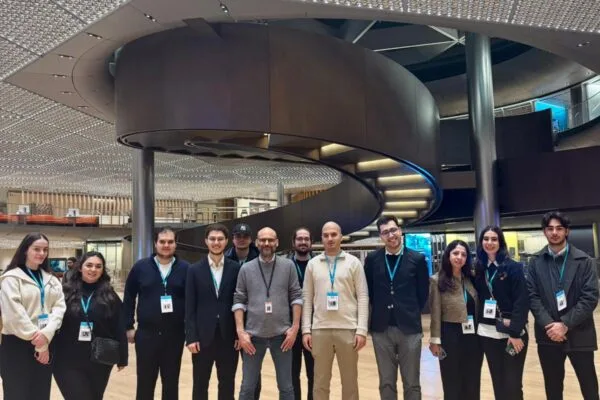
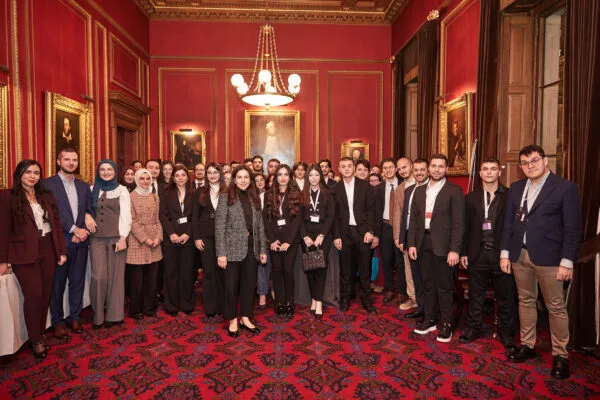
From receptions and university visits to conversations with educators and professionals, Echos creates opportunities for students to engage with people, ideas and institutions beyond their immediate academic work.

Start with where the student is today.

Tell us where the student is now, what they may be considering and what remains uncertain. We will help make sense of the options and decide what should happen next.

Speak With Echos