Academic Director
The continuity behind the plan.
The Academic Director holds the wider picture, reviews progress, sets priorities and coordinates the specialists involved. At Echos, this role is led by Dr Ayşe Zeynep Nayır.



Academic Mentoring
Echos Mentoring brings academic guidance, subject specialists and long-term planning into one coordinated relationship — from school years through postgraduate study.
Individual attention shaped around the student — not a package applied to every case.
The right specialists working within one academic direction, so the student doesn’t have to connect separate advice.
Mentoring that builds the student’s capacity to manage their own academic life over time.
Beyond tutoring
A student may first need help with mathematics, an essay, a difficult module or an approaching examination. But academic difficulty rarely exists in isolation.
Organisation, confidence, feedback and uncertainty about what comes next can all influence performance. Mentoring connects these factors and adapts as circumstances change.
Assignments, examinations, feedback, study habits and academic performance. The immediate demands and what is required to sustain them throughout the year.
Organisation, confidence, communication, adjustment to a new environment and independent working. The habits that make academic work possible consistently over time.
Subject choices, progression, internships, careers and the decisions that come next. Keeping the student’s attention on what the current work is preparing them for.
One approach, different stages
Academic demands evolve. So does the mentoring. Each stage has its own pressures, its own pace and its own version of what help looks like.

School Years
As academic expectations increase, students need more than subject knowledge. Mentoring helps them develop effective study routines, manage examinations and see how current choices may affect later options.
Explore School Years Mentoring
Foundation
Foundation programmes move quickly. Attendance, module performance, deadlines and progression conditions need to be understood early and managed consistently throughout the year.
Explore Foundation Mentoring
University
University brings greater independence at the same time as academic expectations become more demanding. Mentoring helps students adapt, recognise difficulties early and make better use of the opportunities around them.
The same applies at Master’s level, where programmes are shorter and there is less time to recover from a slow start.
Explore University MentoringA coordinated mentoring model
The kind of help required can change over time. Echos brings together the right specialists as needs evolve, while keeping the overall direction connected. The team is shaped around the student — it is not a fixed package.
Academic Director
The Academic Director holds the wider picture, reviews progress, sets priorities and coordinates the specialists involved. At Echos, this role is led by Dr Ayşe Zeynep Nayır.

Subject Mentors
Subject Mentors work directly with students in their academic field, helping with understanding, assignments, examinations, feedback and better ways of working.

Career Mentoring
Career mentoring can bring internships, professional experience, postgraduate options and future planning into the wider academic strategy.
The right match
Academic credentials alone do not make someone the right mentor for every student. We consider subject, level, language, communication style, confidence, working habits and what the mentoring needs to achieve before deciding who should work with a student.
As needs change, the mentor team can change too. The wider academic direction remains consistent.
Clarity for families
As students become older and more independent, families naturally have less visibility into everyday academic life. Reporting is agreed according to the student’s age, circumstances and level of independence.
It gives families a clearer view of progress, priorities and what may need attention next — without taking responsibility away from the student.
Independence as the outcome
Mentors may explain, teach, question, review and challenge. They do not replace the student. Academic work, attendance, communication and decision-making remain the student’s own.
Success means a student who notices problems earlier, uses feedback more effectively and becomes increasingly capable of managing their own academic life.

Mentoring in practice
Individual results are published only when the underlying facts and the student’s permission are confirmed.

Case one
A King’s Foundation student began with mathematics as his greatest academic challenge. With focused tuition and mentoring, he completed the year with a 75% overall average and scored 93 in mathematics.
Outcome75% Foundation average · 93 in mathematics · Progression to King’s College London
Read the journey
Case two
After an unsuccessful foundation year and a course choice that did not reflect the student’s strengths, Echos helped reassess the route and provided structured mentoring through the repeated year. The student finished with a 70% average and progressed to Queen Mary University of London.
OutcomeFailed foundation year became 70% · Progression to Queen Mary University of London
Read the journeyCommon questions
The Echos community
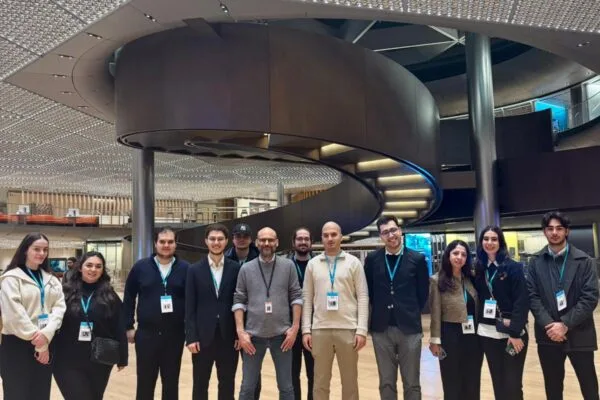
From receptions and university visits to conversations with educators and professionals, Echos creates opportunities for students to engage with people, ideas and institutions beyond their immediate academic work.
Tell us where the student is now, what they may be considering and what remains uncertain. We will help make sense of the options and decide what should happen next.
 Speak With Echos